
The Posthumous Work of the Orthodox Theologian John Zizioulas
L’Osservatore Romano – Wednesday, September 10, 2025
by Sergio Valzania
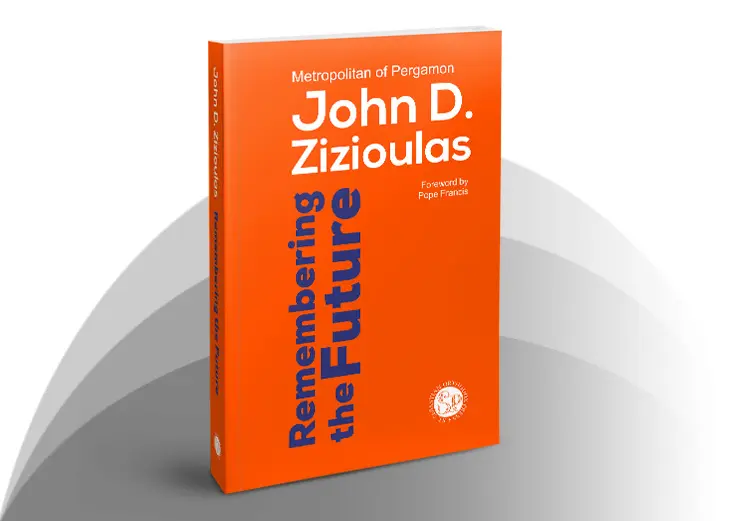
There are still some who concern themselves with ontology within theology. The search for the foundations of truth through logical and scriptural reflection is the central topic of Remembering the Future. Toward an Ontology in an Eschatological Perspective (Bologna, EDB, 2024, 376 pages, €30, edited by Maxim Vasiljević), the posthumous work of John Zizioulas, a highly esteemed Orthodox theologian who passed away less than two years ago.
The book’s core thesis, explicit from the title, does not differ greatly from that proposed by Emanuele Severino in the second half of the last century: everything transitory is devoid of reality. It comes from nothing and returns to nothing. Zizioulas develops the reasoning by emphasizing how the Greek philosophical tradition attempted to escape this observation by taking refuge in the past, imagining an original season of perfection from which humanity—or all of creation—has fallen and to which it longs to return. Western thought has developed by modeling itself on this logical paradigm, according to which the past prevails over the future, which is its continuation and necessary, though deteriorated, outcome.
On the ontological level, truth is then sought in a “before” and an “elsewhere” that precede what our senses let us perceive and which completely condition it. The most structured and radical example of this mental construction is offered by Plato, for whom reality lies outside the sensible world and consists of ideas that precede physical entities and upon which they are modeled, remaining imperfect images, shadows.
Zizioulas’ theological frame of reference is the Greek Fathers, especially Maximus the Confessor. In his writings this Church Father shows a mature awareness of the past/future relationship inherent in the biblical eschatological vision, alongside a critique of the protological framework—linked to the “before”—formalized by Plato and shared by Aristotle. With an attitude characteristic of Orthodox spiritual inquiry, Zizioulas does not engage with scholastic thought but rather measures himself against the figures and results of modern and contemporary philosophy and science—Hegel, Darwin, Ricoeur, Rahner, Einstein, and quantum physics—toward which he shows attentive interest and more than superficial knowledge.
Zizioulas warns that the biblical representation of the world is the exact inverse of that developed by classical Greek reflection. The existence of reality and its permanence beyond death are not placed by Sacred Scripture in a past to which one refers and ultimately longs to return in an endless cycle, but rather in a future guaranteed by the Word of God—so powerful and reliable as to be a Person of the Trinity.
It is the promise that founds history and gives it meaning—first the promise of a land where the chosen people can dwell, and in an eschatological perspective the assurance of the Parousia and, through it, of salvation for all creation. The incarnate and gloriously risen Christ, placed at the end of the history of humanity and of all that surrounds it and has been entrusted to it, gives meaning to the first while saving the second.
Zizioulas draws many consequences from this reversal of perspective. First among them is the centrality of the Eucharist, anticipation and indissoluble link with the Parousia, and therefore the primacy of Christ’s Resurrection over the sacrificial moment of the Cross—a position he claims as characteristic of the Orthodox Church compared with both Catholicism and Protestantism. That this was the attitude of the early Church, he believes, is evident from the joy with which the liturgy was celebrated, while St. Paul himself indicates the Resurrection as the foundation of faith, the element that gives it meaning and without which it would be empty.
The attribution of value to the history of humanity and of creation has no rationale if the past gives meaning and determines the present and the future. On the contrary, its importance emerges if the future calls the present to itself, if eschatology prevails over knowledge of the past in understanding the present and preparing the future.
Another privileged field of reflection concerns the meaning of original sin and its relationship to the last things and the universal judgment. According to Zizioulas, the eschaton—the final moment—is constituted by the purification of all creation from death. Only what is consistent with the divine call confirms its reality; all the rest is destined to disappear—that is, to manifest its radical unreality—since evil and death exist only as a refusal of encounter with God.
In this sense, “the final judgment should not be seen as a vindictive act of God, but as healing—a purification of the entire creation from evil.”
L’opera postuma del teologo ortodosso John Zizioulas
Nel futuro non c’è spazio per il determinismo
L’OSSERVATORE ROMANO mercoledì 10 settembre 2025
di Sergio Valzania
C’è qualcuno che si occupa ancora di ontologia in ambito teologico. La ricerca dei fondamenti della verità attraverso la riflessione logica e scritturale è l’argomento centrale di Ricordare il futuro. Per una ontologia in prospettiva escatologica (Bologna, Edb, 2024, pagine 376, euro 30, a cura di Maxim Vasiljevic) opera postuma di John Zizioulas, apprezzatissimo teologo ortodosso scomparso meno di due anni fa.
La tesi di fondo del libro, esplicita sin dal titolo, non ha radici molto diverse da quella proposta da Emanuele Severino nella seconda metà del secolo scorso: tutto ciò che è transeunte è privo di realtà. Proviene dal nulla e al nulla ritorna. Zizioulas sviluppa il ragionamento sottolineando come il tentativo di sfuggire da questa constatazione elaborato dalla tradizione filosofica greca si sia basato sul rifugiarsi nel passato, immaginando l’esistenza originaria di una stagione di perfezione dalla quale l’umanità, o l’intera creazione, è decaduta e alla quale ambisce tornare. Il pensiero occidentale si è sviluppato modellandosi su questo paradigma logico, secondo il quale il passato prevale sul futuro che ne è la continuazione, l’esito; necessario e peggiorato.
Sul piano ontologico la verità viene allora cercata in un prima e in un altrove che precedono ciò che i sensi ci fanno percepire e lo condizionano in modo totale. L’esempio
massimo, strutturato e radicale, di questa costruzione mentale è offerto da Platone, per il quale la realtà sta fuori dal mondo sensibile ed è costituita da idee che precedono gli enti fisici e sulle quali essi si sono modellati, rimanendone immagini imperfette, ombre.
L’ambito teologico di riferimento di Zizioulas è costituito dalla patristica greca e da Massimo il confessore in particolare. Nei suoi scritti il padre della Chiesa dimostra una consapevolezza matura del rapporto passato/futuro che la visione escatologica biblica comporta con la parallela critica all’impostazione protologica, collegata al prima, formalizzata da Platone e condivisa da Aristotele. Con un atteggiamento caratteristico della ricerca spirituale ortodossa, Zizioulas non si confronta con il pensiero scolastico preferendo semmai misurarsi con le figure e i risultati della filosofia e della scienza moderna e contemporanea — Hegel, Darwin, Ricoeur, Rahner, Einstein e la fisica quantistica— rispetto ai quali manifesta interesse attento e conoscenze non sup erficiali.
La rappresentazione del mondo proposta dalla Bibbia, avverte Zizioulas, è l’esatto inverso di quella sviluppata dalla riflessione greca classica. L’esistenza del reale, la sua permanenza oltre la morte, non viene collocata dalle Sacre Scritture in un passato al quale riferirsi e al quale in definitiva si ambisce a ritornare, in una ciclicità interminabile, ma piuttosto in un esito futuro garantito dalla Parola di Dio, così potente e affidabile da essere Persona della Trinità.
A fondare la storia e a darle un senso è la promessa, prima di una terra dove insediarsi per il popolo eletto, e in prospettiva escatologica l’assicurazione della parusia e attraverso quella della salvezza per l’intera creazione. Cristo incarnato e risorto nella gloria, posto alla fine della storia dell’umanità e di quanto la circonda e le è stato affidato, dà un senso alla prima mentre salva la seconda.
Molte sono le conseguenze che Zizioulas trae da questo ribaltamento di prospettiva. Prima fra tutte la centralità dell’eucaristia, anticipazione e legame indissolubile con la parusia, e quindi la prevalenza della risurrezione di Cristo rispetto al momento sacrificale della croce. Posizione che il teologo rivendica come caratteristica della Chiesa ortodossa rispetto sia al cattolicesimo che al protestantesimo. Che questo fosse l’atteggiamento della Chiesa primitiva risulta secondo lui evidente dalla gioia con la quale veniva vissuta la liturgia, mentre san Paolo stesso indica nella risurrezione l’elemento fondante della fede, quello che le fornisce senso e senza il quale essa risulterebbe vuota.
L’attribuzione di un valore alla storia dell’umanità, e del creato, non ha ragion d’essere se è il passato a dare significato e a determinare il presente e il futuro. Al contrario se ne scopre l’importanza se è il futuro a chiamare a sé il presente, se l’escatologia prevale sulla conoscenza del passato nella comprensione del presente e nella preparazione del futuro.
Ambito privilegiato della riflessione è inoltre quello relativo al significato del peccato originale e il suo rapporto con le cose ultime e il giudizio universale. Secondo Zizioulas l’eschaton, il momento finale è costituito dalla purificazione dell’intero creato dalla morte. Solo ciò che è coerente con la convocazione divina conferma la propria realtà, tutto il resto è destinato a scomparire, cioè a manifestare la propria radicale irrealtà, dato che il male e la morte non esistono se non come rinuncia all’incontro con Dio.
In questo senso «il giudizio finale non deve essere visto come un atto vendicativo di Dio, ma di guarigione, una purificazione dell’intera creazione dal male».